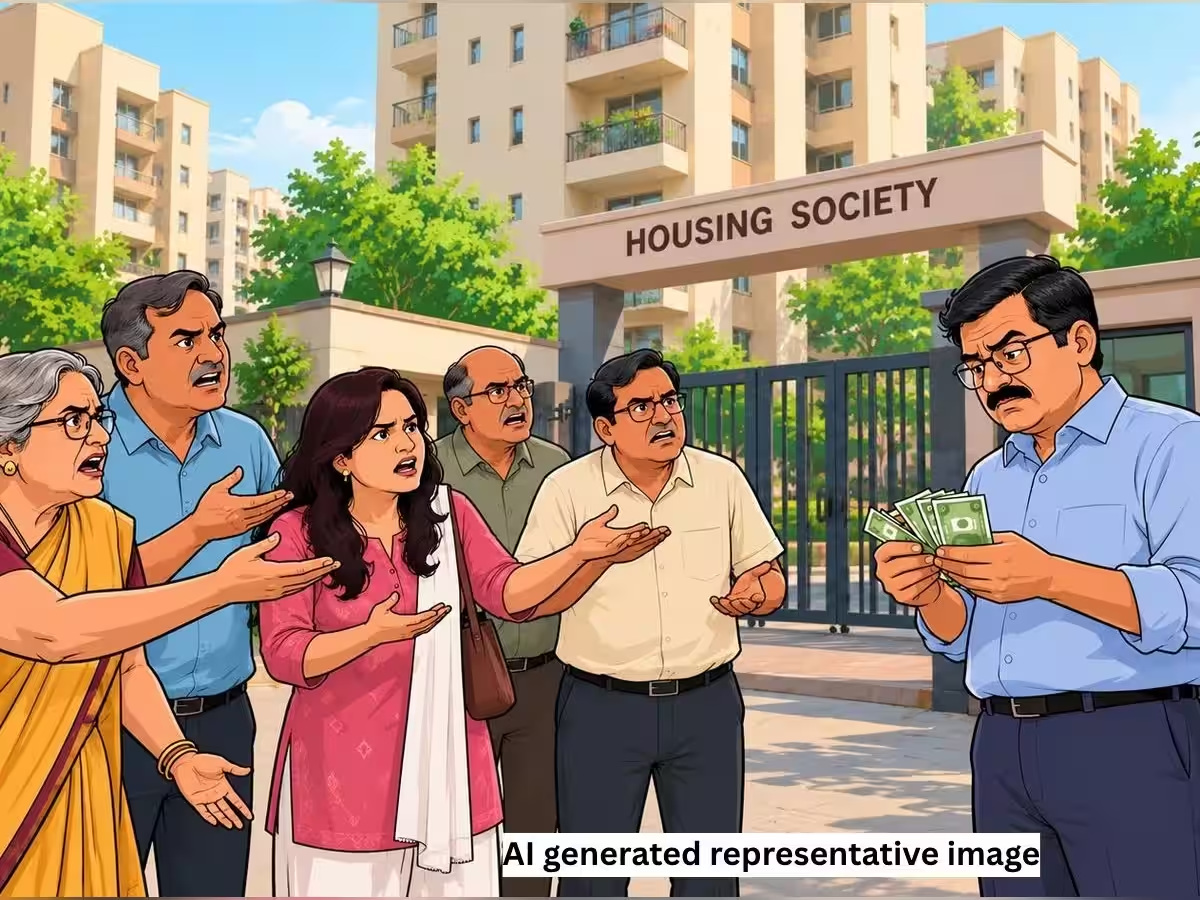
In a significant ruling for co-operative housing governance, the Maharashtra State Co-operative Appellate Court has provided interim relief to six homeowners in a Vile Parle housing society. The dispute arose after the society’s managing committee, facing allegations of misappropriating Rs 3.08 crore in funds, attempted to recover legal costs by selectively increasing the maintenance bills of the six residents who filed the initial complaint.
The Anatomy of a Financial Overreach
Between June and August 2024, the six homeowners noticed an unusual spike in their monthly maintenance—specifically, an additional charge of Rs 71,429 per month. When challenged, the society’s leadership claimed these charges were meant to cover the legal expenses incurred in defending against the misappropriation lawsuit. This maneuver, however, lacked both a prior general body resolution and a transparent legal basis.
As noted by legal experts, the society attempted to bypass established procedural norms. The court observed that the society debited these legal expenses as early as June 2024, despite the relevant Annual General Meeting (AGM) resolution not being passed until September 3, 2024. This retroactive billing is a clear violation of the standard protocols governing co-operative societies, which require that legal charges be treated as service charges and distributed equally among all members rather than weaponized against specific individuals.
Compliance and Revenue Implications
From a fiscal and compliance perspective, this case serves as a cautionary tale regarding the misuse of society funds and the mischaracterization of service charges. Under the Model Bye-laws—specifically Nos. 64, 65(k), and 66(vi)—legal expenses are categorized as collective service charges. When a managing committee attempts to isolate these costs for specific members, they are not only acting in bad faith but also creating a distorted financial ledger that complicates administrative accountability and compliance.
Furthermore, the attempt to label these disputed amounts as maintenance arrears could lead to a member being wrongfully classified as a defaulter. In a regulated environment, such misclassification can have cascading effects on the society’s financial health and its adherence to state-mandated transparency requirements. Managing committees must recognize that any deviation from the prescribed corporate statutory filing deadlines or financial bylaws invites intense judicial scrutiny. By attempting to use these fees as a punitive measure, the society failed to maintain the fiscal discipline required to manage common areas and shared liabilities.
The Judicial Verdict on Governance
Justice A. S. Wanve, presiding over the case, underscored that housing societies must operate within the framework of the law and cannot function as instruments for personal vendettas. The court’s interim order mandates that the society immediately cease the collection of these legal fees and refund the amounts already recovered. This decision reaffirms that members cannot be forced to bear the burden of a committee’s legal defense unless explicitly directed by a competent court or a validly passed general body resolution.
This case highlights the fragility of internal governance when committees prioritize power over procedural integrity. For residents, it is a reminder that the GST and compliance framework that governs modern urban living is designed to protect the rights of the individual against the potential overreach of collective bodies. When a society fails to adhere to these standards, the resulting legal friction often leads to prolonged litigation that depletes the very funds the committee is sworn to protect.
Ultimately, the court’s intervention serves as a necessary check on management committees that might otherwise treat society coffers as a private resource to suppress legitimate dissent. By enforcing the principle of equal distribution of service charges, the judiciary has reinforced the importance of transparency in the financial operations of housing societies across the state.
Frequently Asked Questions
The housing society increased the fees to cover legal expenses incurred while defending against a lawsuit filed by these residents regarding the misappropriation of Rs 3.08 crore in society funds.
No. The court found that according to Model Bye-laws 64, 65(k), and 66(vi), legal expenses must be classified as service charges and divided equally among all members, not levied selectively.
The society began debiting the legal expenses in June 2024, whereas the relevant AGM resolution was not passed until September 3, 2024.
The court issued an interim injunction restraining the society from levying, demanding, or collecting these legal expenses and ordered them to refund the money already collected.
The court observed that the society's conduct was an extra-judicial method intended to pressurize the members, discourage them from pursuing legal remedies, and wrongfully label them as defaulters.
Justice A. S. Wanve of the Maharashtra Co-operative Appellate Court, Mumbai, delivered the judgment on October 14, 2026.


